
Sous Vide Steak: Time, Temperature & Perfect Sear
-
Quick Sous Vide Steak Recipe
- A quick food-safety note
-
Equipment
-
Ingredients
-
How to Sous Vide Steak
-
Sous Vide Steak Temperature Chart
-
How Long to Sous Vide Steak
-
Should You Season Steak Before Sous Vide?
-
What Should You Put in the Sous Vide Bag?
-
How to Get a Great Crust Without a Gray Band
-
Sous Vide vs. Reverse Sear
-
Variations
-
Pro Tips
-
Troubleshooting
-
Storage and Make-Ahead
-
FAQ
- What is the best temperature for sous vide steak?
- How long should I sous vide a 1-inch steak?
- Should I put butter in the sous vide bag?
- Does sous vide steak need to rest?
- Can you sous vide steak from frozen?
- How do you avoid a gray band on steak?
-
You Might Also Like
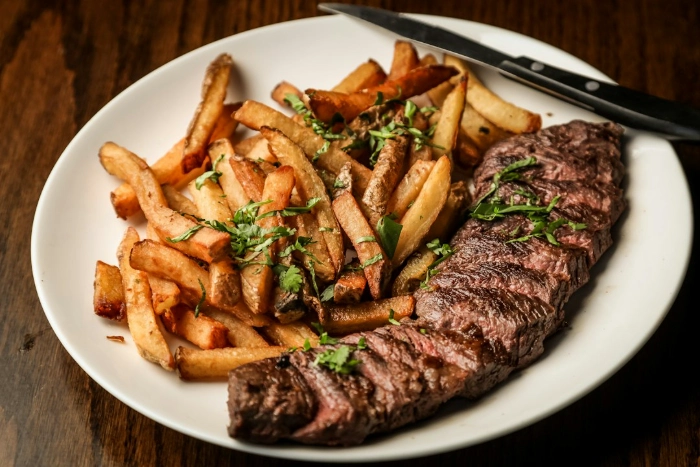
Sous vide is probably the most stress-free way I know to cook steak. You choose the temperature, give the steak enough time to reach it, then finish it over very high heat for a deep golden-brown crust.
I received my first sous vide setup as a Christmas gift around five years ago, and it quickly became one of the most-used pieces of equipment in my kitchen. My first steaks were cooked too warm, too long, and not seared aggressively enough. They were still good - which says a lot about how forgiving sous vide is - but there was plenty of room to improve.
Today, my approach is much simpler: start with well-marbled beef, season it before bagging, cook according to thickness and preferred doneness, dry it extremely well, then sear as hot and fast as possible.
If you want to understand the basics of the technique first, start with my Sous Vide Cooking: A Beginner's Guide.
Quick Sous Vide Steak Recipe
This is the reliable starting point I would recommend before you begin experimenting.
Steak | Ribeye, about 2.5 cm / 1 inch thick |
Water temperature | 54°C / 129°F |
Time | 2–2.5 hours |
Seasoning | Salt, black pepper, granulated garlic |
Optional | Rosemary, thyme, butter or beef tallow |
Finish | Very hot grill, cast iron, carbon steel or culinary torch |
Resting | No traditional resting period needed |
My personal preference is actually slightly lower - around 52°C / 126°F - because I like steak on the rarer side of medium-rare. If this is your first sous vide steak, however, 54°C / 129°F is a much better starting point, and you can adjust from there.
A quick food-safety note
Doneness and pasteurization are not the same thing. USDA consumer guidance recommends cooking whole beef steaks to 62.8°C / 145°F with a three-minute rest, while sous vide can use lower temperatures when paired with sufficiently long, validated holding times. The exact time depends heavily on thickness.
The 54°C / 129°F recipe here is primarily a doneness method, not a pasteurization schedule. I would not use extended low-temperature cooks for higher-risk diners, and mechanically tenderized beef deserves extra caution because surface bacteria can be pushed into the interior.
Equipment
You don't need an expensive setup. A basic immersion circulator, water container, vacuum sealer, and heat-safe sous vide bags are enough.
For finishing, use a cast-iron or carbon-steel pan, a very hot grill, or a suitable culinary/grill torch. You will also need plenty of paper towels - drying the steak after sous vide is far more important than it sounds.
Ingredients
For two steaks:
Ingredient | Amount |
|---|---|
Ribeye steaks | 2, about 2.5 cm / 1 inch thick |
Fine sea salt | Generously, to taste |
Black pepper | About ½ tsp |
Granulated garlic | About ½ tsp |
Rosemary or thyme | 1–2 sprigs, optional |
High-smoke-point cooking fat | About 15 ml / 1 tbsp |
Flaky salt | Optional, for finishing |
Don't obsess over the steak's exact weight. Thickness matters much more than weight for sous vide cooking.
And don't underestimate the beef itself. Marbling is everything. Sous vide gives you exceptional temperature control, tenderness, and juiciness, but no cooking technique can fully compensate for a poorly marbled steak.
How to Sous Vide Steak
Season the steak. Salt both sides generously, remembering that a thick steak needs more seasoning than a thin piece of meat. Add black pepper and granulated garlic. Rosemary or thyme can also go into the bag if you have them.
Vacuum seal it. Seal the steak firmly in a heat-safe, BPA-free sous vide bag. If I'm not happy with the seal or notice a crease around the sealing line, I simply seal it again rather than risk water getting into an expensive piece of beef.
Set the water bath to 54°C / 129°F. For the most repeatable result, let the bath reach temperature before adding the steak. Cook a 2.5 cm / 1 inch ribeye for about 2–2.5 hours.
Remove and dry it extremely well. Take the steak out of the bag and use paper towels to remove as much surface moisture as physically possible. A wet steak steams before it browns, which is exactly what you don't want.
Cool briefly if you have time. This is optional, but I like letting the steak cool before searing - sometimes even in the refrigerator. Cooling doesn't magically improve the crust, it just gives you more thermal headroom before the center starts to overcook.
Pat the steaks dry. Once you remove the steaks from the bags, pat them thoroughly dry with paper towels. The drier the surface, the faster and more evenly it will brown, helping you build a deep crust without overcooking the center.
Heat your pan or grill aggressively. Use a small amount of high-smoke-point fat and heat the cooking surface until it's extremely hot. For sous vide steak, the goal isn't gentle cooking anymore - the inside is already done.
Sear fast. Brown each surface only until you are happy with the crust. If the steak has a fat cap, sear that separately. If the steak isn't making even contact with the pan, place a chef's press, a clean, heavy saucepan, or a smaller pan on top. You don't need a dedicated steak press; you just want gentle, even pressure across the surface.
Serve. Sous vide steak doesn't need the long rest time of a conventionally cooked steak. If serving it sliced, slice against the grain and finish with flaky salt if you like.
Sous Vide Steak Temperature Chart
There is no universally agreed temperature where rare suddenly becomes medium-rare or medium. Think of these as practical ranges rather than absolute boundaries; even respected sous vide references use slightly different definitions.
Doneness | Temperature |
|---|---|
Rare | 50–52°C / 122–126°F |
Medium-rare | 53–55°C / 127–131°F |
Medium | 57–59°C / 135–138°F |
Medium-well | 60–63°C / 140–145°F |
Well done | 65°C+ / 149°F+ |
For me, 52°C / 126°F is the sweet spot, but that is very much personal preference. Start around 54°C and experiment. Even a few degrees can be surprisingly noticeable in steak.
How Long to Sous Vide Steak
Temperature determines how done your steak becomes. Thickness determines how long it takes the center to approach that temperature.
This is why the weight of the steak isn't particularly useful. A wide 400 g steak may heat faster than a compact 300 g steak if the first one is thinner.
Douglas Baldwin's heat-transfer calculations estimate approximately 1¼ hours for a 25 mm / 1-inch slab, 2½ hours for 40 mm, and 3½ hours for 50 mm to come very close to the bath temperature. These are heating times, not pasteurization times.
Thickness | Approx. heating time |
|---|---|
2.5 cm / 1 inch | ~1¼ hours |
3.5 cm / 1.4 inches | ~2 hours |
4 cm / 1.6 inches | ~2½ hours |
5 cm / 2 inches | ~3½ hours |
I normally leave my 2.5 cm steaks in for a little over 2 hours. Sous vide gives you a generous window, but that doesn't mean longer is always better - eventually texture starts changing.
Sous Vide Everything has also done a practical side-by-side experiment with steaks cooked for different lengths of time:
Should You Season Steak Before Sous Vide?
Yes. Add salt, black pepper, and (optionally) granulated garlic before vacuum sealing.
One small correction to a common explanation is useful here: vacuum sealing doesn't literally suck the seasoning deep into the steak. Salt moves into meat primarily by diffusion over time. Researchers have measured sodium diffusion through meat directly using magnetic-resonance techniques.
Vacuum sealing keeps the seasoning in close contact with the meat and traps everything inside the bag, making the method convenient and consistent.
Guga from Sous Vide Everything has also tested the practical question of salting steak before versus after sous vide:
I don't consider an overnight dry brine necessary for this recipe. If you want to explore that technique separately, it still has advantages - especially surface drying - and you can read my complete Dry Brine Guide.
What Should You Put in the Sous Vide Bag?
My default is very simple: steak, salt, black pepper, and granulated garlic. Fresh rosemary or thyme are good optional additions.
You can also add butter or beef tallow if you enjoy the flavor, though neither is required; they give nice additional flavor.
For searing, butter is not my first choice. Sous vide steak benefits from extremely high finishing heat, and regular butter burns too quickly. Use a high-smoke-point fat instead or maybe ghee can be a good choice.
How to Get a Great Crust Without a Gray Band
A gray band is the overcooked layer between the browned exterior and the properly cooked center. Sous vide gives you beautifully even edge-to-edge doneness, but a slow final sear can create that gray band all over again.
The solution is simple: dry the steak extremely well, use high heat, maximize contact with the cooking surface, and finish as quickly as possible.
My favorite finishing method is actually the grill. Cast iron gives an incredible crust, but the combination of sous vide tenderness with real fire and a little smoke is hard to beat.
A high-output culinary or grill torch can be even faster. Guga has famously experimented with very powerful flame-based searing because it creates browning with very little time for heat to travel inward. His actual flamethrower video explicitly says not to try a flamethrower at home, so stick to equipment designed for cooking or grilling.
For more on the browning itself, see my guide to searing and the science behind the Maillard reaction.
Sous Vide vs. Reverse Sear
The two techniques are more similar than they first appear. Both gently bring the center toward a target temperature and finish the steak with intense heat.
Reverse searing can have one advantage: the oven naturally dries the surface, which can make developing a deep crust slightly easier. Sous vide wins for me almost everywhere else. It is more forgiving, easier to time for guests, and incredibly consistent.
But for thin steaks, I wouldn't bother with either method. If the steak is so thin that the final sear alone can push the center past your target temperature, cook it conventionally instead. You can compare the methods in my Reverse Sear Steak guide.
Variations
The same basic method works well with New York strip, sirloin, and tenderloin. The desired doneness determines the water temperature, while thickness determines how long the steak needs to heat through.
Dry-aged beef also works beautifully sous vide. I wouldn't change the technique; the bigger difference comes from the meat's character.
You can even cook steak from frozen. Baldwin's calculations put a 25 mm steak at roughly 1¾ hours from frozen versus 1¼ hours from refrigerator temperature, and Sous Vide Everything reached a similarly practical rule of adding roughly 30 minutes in their frozen-steak experiment.
Pro Tips
The most important lessons are simple: prioritize marbling over fancy equipment, choose steak thick enough to survive a hard sear, season confidently, dry the surface far more than you think is necessary, use very high finishing heat, and always slice against the grain.
If cooking several steaks at once, don't stack the bags tightly together. Water needs room to circulate around them. A properly sized bath can handle several steaks without a problem as long as it can maintain temperature and circulate freely.
Troubleshooting
My steak has a weak, gray crust. The surface was probably too wet, the cooking surface wasn't hot enough, or there wasn't enough contact between the steak and pan. Dry it aggressively and use a heavy saucepan as a gentle press if necessary.
The center became overcooked while searing. The steak may have been too thin, or you spent too long building the crust. Cooling it briefly before the sear gives you more margin.
My sous vide steak is still tough. Sous vide can't fix poor trimming, low-quality beef, or incorrect slicing. Remove obvious tough connective tissue where appropriate and always slice against the grain.
It tastes bland. Thick meat needs confident seasoning. One of the easiest steak mistakes is simply not using enough salt.
Storage and Make-Ahead
Sous vide is excellent for planning ahead, but storage needs more care than immediate serving.
If you intentionally cook steak for later, use a validated pasteurization schedule, then rapidly chill the sealed bag in an ice bath before refrigerating. For the lower-temperature 54°C recipe in this article, my preference is to cook and serve it the same day rather than treat it as a multi-day cook-chill method. USDA also recommends refrigerating cooked foods promptly rather than cooling slowly at room temperature.
FAQ
What is the best temperature for sous vide steak?
For a medium-rare starting point, I recommend 54°C / 129°F. I personally prefer around 52°C / 126°F, but that produces a rarer result and should not be used for extended cooking.
How long should I sous vide a 1-inch steak?
I usually cook a 2.5 cm / 1-inch ribeye for ~2 hours. Heat-transfer calculations show that a steak this thick reaches bath temperature sooner, but the extra window keeps the workflow relaxed and consistent.
Should I put butter in the sous vide bag?
You can, but you don't need to. I sometimes use butter or beef tallow in the bag, but good beef, the right temperature, and a great final sear matter much more.
Does sous vide steak need to rest?
Not in the conventional sense. The steak has already cooked at a very even temperature, so I am happy to slice it shortly after the final sear.
Can you sous vide steak from frozen?
Yes. Expect it to need additional heating time - roughly another 30 minutes is a useful starting point for a steak around 2.5 cm / 1 inch thick. But the thicker it is, the more extra time it needs.
How do you avoid a gray band on steak?
Dry the surface thoroughly, optionally cool the steak before finishing, use extremely high heat, and sear as quickly as possible. The goal is to brown the outside before significant heat can travel deeper into the steak.
You Might Also Like
Reverse Sear Steak - Another excellent way to get even doneness and a deep crust, especially if you don't have a sous vide machine.
Sous Vide Cooking: A Beginner's Guide - Start here if you want to understand the sous vide method, equipment, and basic workflow before experimenting with more foods.
What Does Searing Mean? - Learn how high heat, a dry surface, and good pan contact create the crust that makes this steak work.
The Science Behind the Maillard Reaction - Go deeper into the chemistry behind that deep golden-brown steak crust.
-
Quick Sous Vide Steak Recipe
- A quick food-safety note
-
Equipment
-
Ingredients
-
How to Sous Vide Steak
-
Sous Vide Steak Temperature Chart
-
How Long to Sous Vide Steak
-
Should You Season Steak Before Sous Vide?
-
What Should You Put in the Sous Vide Bag?
-
How to Get a Great Crust Without a Gray Band
-
Sous Vide vs. Reverse Sear
-
Variations
-
Pro Tips
-
Troubleshooting
-
Storage and Make-Ahead
-
FAQ
- What is the best temperature for sous vide steak?
- How long should I sous vide a 1-inch steak?
- Should I put butter in the sous vide bag?
- Does sous vide steak need to rest?
- Can you sous vide steak from frozen?
- How do you avoid a gray band on steak?
-
You Might Also Like